
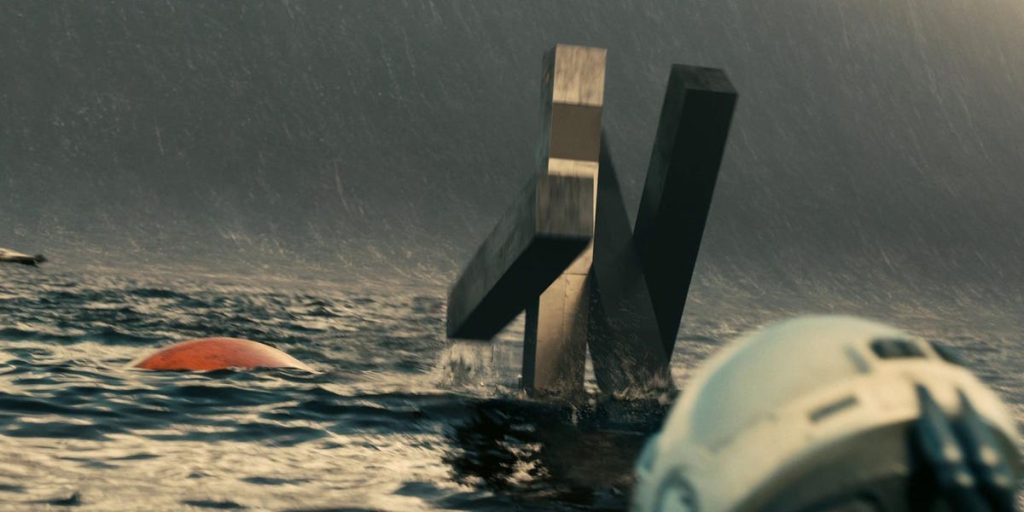
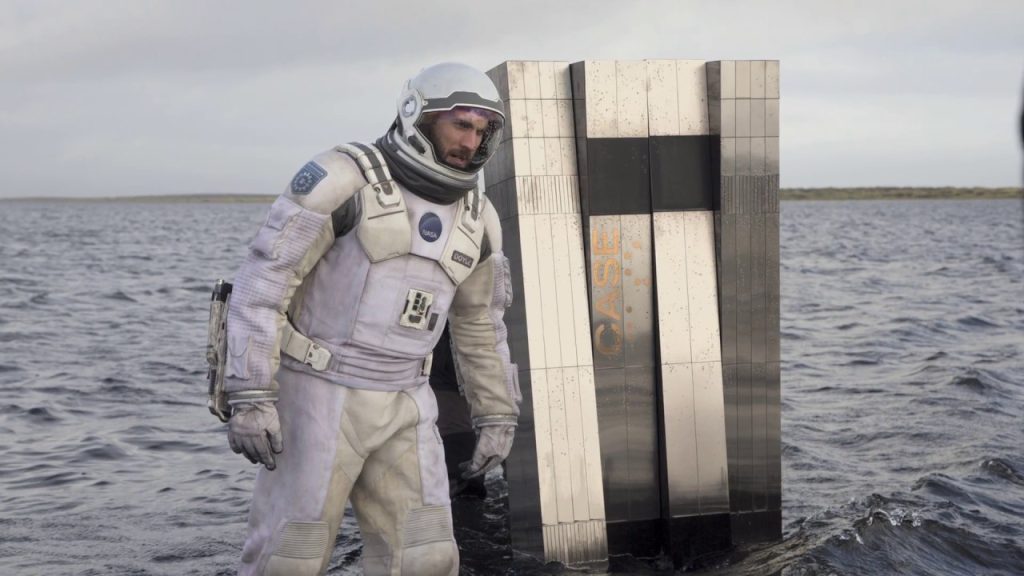
In the movie Interstellar, the robot TARS gives AI a bad name with its snarky attitude and unwillingness to help without explicit instructions. In one scene, TARS stands there in disbelief as the astronauts it should have been assisting are almost killed by a tsunami wave. Despite its temporary malfunction, TARS still shows us what is possible when AI becomes a part of space exploration.
For centuries, humanity has looked to the stars and dreamed about space. Since the Apollo moon landing, space exploration has always been considered the pinnacle of technological innovation. Even scientists and researchers who are routinely blown away by what we discover here on Earth would likely agree that technology’s height is beyond the stratosphere.
As we enter a new era of space travel, AI could be exactly what we need to push the boundaries of what is possible. AI can make space exploration more accessible and less fraught with human risk while enabling deeper exploration of the cosmos. AI-powered machines, robots, and telescopes will transform the way we view the universe as we search for habitable exoplanets. It’s amazing to think that we are at the very start of what could be incredible advances in space exploration.
One of the biggest current challenges in space exploration is communication delay. As Interstellar shows us, in space, time is of the essence, but our current technology hasn’t yet kept up with the pace of space. According to the European Space Agency, sending a message from Earth to Mars takes 13 minutes and 48 seconds. This delay may seem small but can be incredibly significant when decisions must be made quickly. AI offers the possibility of autonomous spacecraft and rovers that can make intelligent split-second decisions without human input.
NASA has already used AI to pilot its Perseverance Rover, which landed on Mars in 2021. The rover navigates the Martian surface on its own and knows how to avoid obstacles and identify areas of scientific interest. It’s not up there alone. The Ingenuity Helicopter has a companion, which also uses AI to pilot itself.
Rovers aren’t the only spacecraft being guided by AI. The world is also developing spacecraft that will be guided by AI-based navigation systems, which will allow the craft to map and adjust its course dynamically. This is especially critical for deep-space missions, where real-time communication with Earth is impractical. Continued advances in artificial intelligence will only make new spacecraft and rovers more independent and offer a broader range of research potential.
Another way that AI is transforming space exploration is by leveraging telescopes to discover planets, comets, and even asteroids that may have otherwise been overlooked. Traditional methods of astronomers analyzing data from telescopes on their own are fading as AI is processing what we see in the sky faster and with greater accuracy. The benefit is also a greater awareness of near-Earth objects sooner to reduce the threats of asteroid impacts.
You’ve probably seen a news article or two about a surprise asteroid flying by, but these surprises will reduce as AI gains more footing in space exploration. In addition to spotting asteroids, AI will also play an interesting role in the search for alien life. Some scientists think that AI could potentially detect patterns in cosmic signals that human researchers would miss. AI is already analyzing data from telescopes to identify signals from intelligent extraterrestrial civilizations.
Although astronauts don’t yet have TARS, crew members on the ISS have CIMON, a voice-controlled, AI-powered, free-floating robot that looks like a giant face and performs tasks similar to Siri or Alexa. However, In the future, AI will support astronauts in more complex ways, like offering medical diagnoses, solving complex problems, and even acting as a close companion during extended space travel. As technology progresses, there is no doubt that humanity will explore the moons of Saturn and Jupiter, build colonies on Mars, and decode some of the universe’s secrets with the help of AI.